Goodbye St David's
Don't worry, it's just a university being shut down

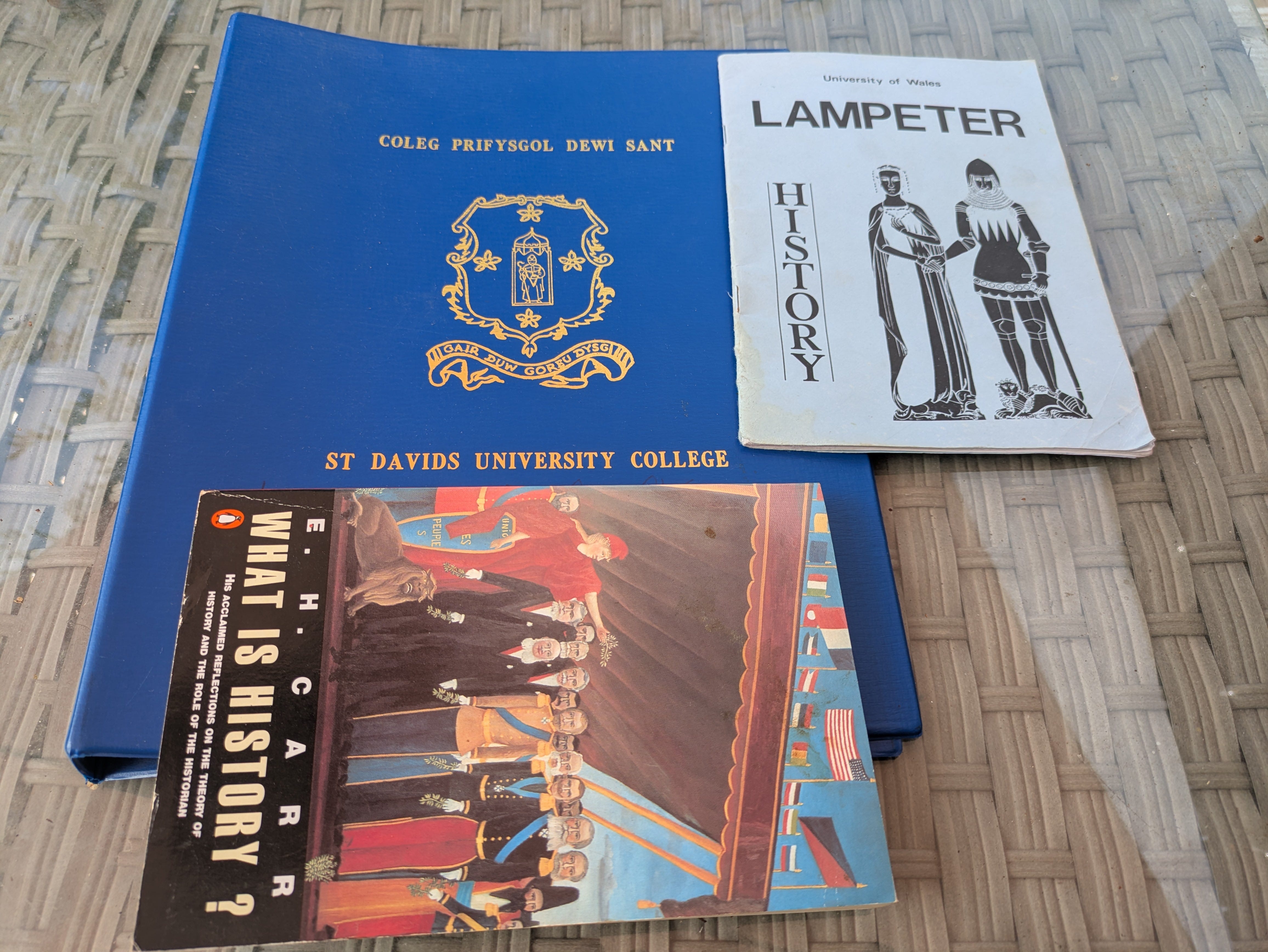
Outside of Wales, the closing down of St David’s University College, Lampeter wasn’t considered very newsworthy.
We’ve become so accustomed to educational establishments being run as businesses, that a small university in Dyfed-Powys being ‘rationalised’ is no longer shocking. It bothered me though.
I learned about its fate through Facebook. It was gradual and we joked on-line about it being converted into a Wetherspoons or a Tescos Megastore. Turns out the threat to the college was real.
When I studied history there, it was the smallest university in Britain, possibly Europe. It was starting to expand when I graduated, and continued to grow until somebody somewhere decided it wasn’t worth the money it was costing. It started to scale down, courses were cut, but it couldn’t be killed off, could it?
St Davids was the runt of the University of Wales’ litter. Dwarfed by Swansea, Bangor and Cardiff; even a trip to the Victorian coastal resort of Aberystwyth, felt like heading into the metropolis.
When we played against the other Welsh universities at any sport, we always lost heavily, but tried to save face by going on a drunken rampage through their campus. I’m not sure they noticed, but we would laugh about it on the way home, with our hoard of stolen signs and traffic cones.
Apart from the words University of Wales appearing on the top of my exam certificate, I don’t think the wider institution ever crossed my mind. They weren’t thinking too much about Lampeter either, it appears.
Then, in the early 2000s, Tony Blair wanted every yahoo in Britain to go to university, funded by ill-suited students, who were to get themselves into massive debt for a degree that was never going to get them a graduate job.
There were also rich students from around the world willing to pay a fortune to study in Britain. Forget about the chancellors in the novels of Waugh or Sharpe, we needed go-head business tsars to expand their colleges to infinity and beyond.
St Davids, which started life as a theological college in 1822, was primarily aimed at the humanities and languages. It was a long way from anywhere. Did anyone ever seriously think that it was going to be a big money spinner? Apparently so.
***
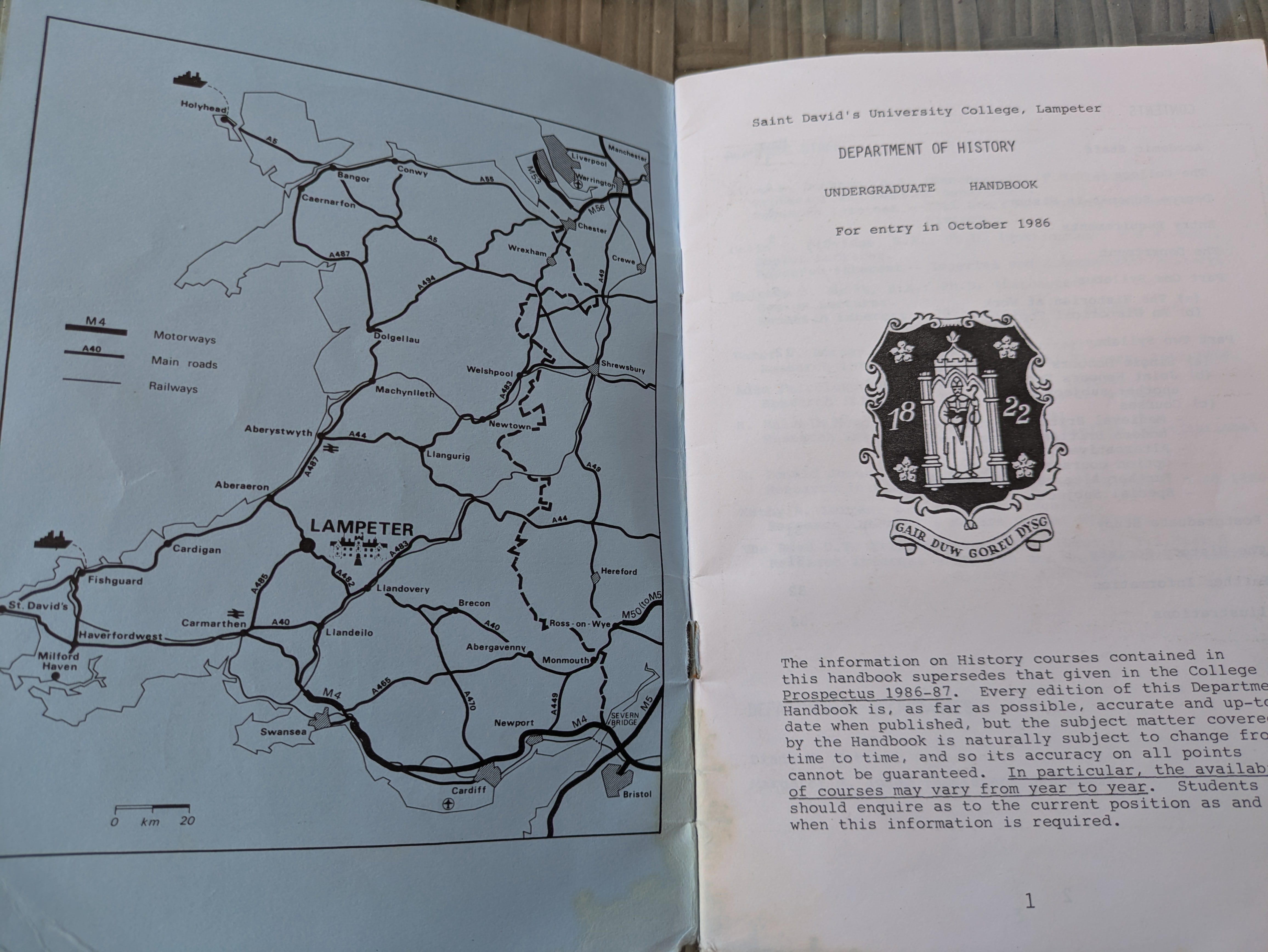
There was no internet, well not as we know it, back in the 1980s, of course. If there had been, I might have done a bit of research before I went. I might have known what I letting myself in for.
First impressions were not good. Yes, the Oxford quad style Old Building was pretty, but I was housed in the ‘Lloyd Thomas,’ accommodation block, which according to legend, was created by an architect who specialised in Scandinavian prisons.
The campus was surrounded by hills, clouds and sheep. Quite unlike the London overspill town I grew up in, and even less like the London railway station I departed from. I was an inverse of Paddington Bear, heading off to deepest, darkest Wales, armed only with my case, rucksack and sandwiches.
The Intercity 125 from London to Swansea was fun, the slow train to Carmarthen and then bus journey to Lampeter would have been pleasant, if it hadn’t been dark and raining when a helpful old lady advised me to get off at the wrong stop.
Finally, I reached my Swedish prison cell. I was very tired. The first students I met seemed awful and the town seemed small, damp and lifeless. I couldn’t suffer this for three years.
I queued patiently for the payphone, in the dark and rain. I informed my mum that I hated the place: the students were all stiffs, the locals only spoke Welsh and my room was designed for a category C prisoner.
It was too late to head home, so I went to the nearest pub and sank quite a few pints of cider. There I got talking to some locals, they can and do switch to English as a courtesy to you, and I met a group of students who became friends for life. I decided to give it a week before quitting, maybe a term, which became the full three years.
It has been suggested that I might have achieved a better class of degree, if I hadn’t spent so much time in pubs drinking cider. Possibly, though after adjusting to the shock of being average at History, no longer best in school, any thoughts of academia soon shrivelled.
***
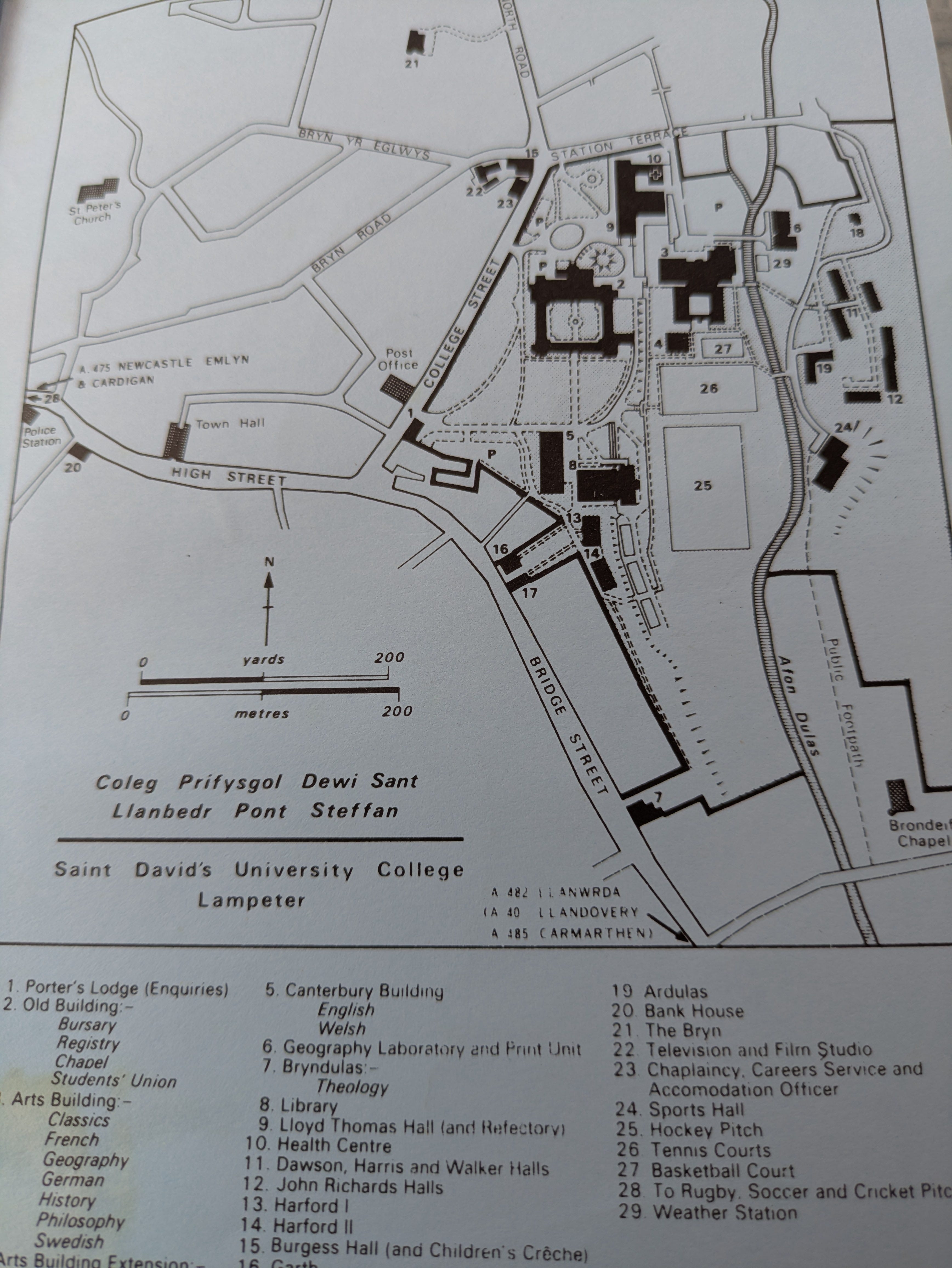
In January 2025, Vice-Chancellor Prof Elwen Evans instructed us all to ‘face the reality’ that due to ‘location’ and ‘transportation’ Lampeter wasn’t viable as a university. The campus would still be used and we were promised that it would be ‘vibrant.' So ‘Spoons it is then.
Ex-students who paid attention, claimed that the place had been deliberately run into the ground by the Uni of Wales, long before the arrival of Prof Evans. A sacrifice that could be made for the greater good, once student numbers were low enough. Who knows? Nobody who matters cared. Lampeter didn’t produce Prime Ministers or Tech billionaires. Mostly, it produced school teachers, vicars and museum curators.
From my time there, I think we had one music journalist, that nice bloke who presents Escape to the Country and a receptionist on Holby City. Well done them, but without a nostalgic/eccentric billionaire to bail it out, or a Stephen Fry/Sandi Tostig to get all upset about it in the media, Lampeter was doomed.
The oldest university in Wales, and there it was, gone.
Thank you St David’s, hwyl fawr.
Thank you for this elegy. I never went to Lampeter, but feel like I did because, working in the English department at another small university, I had two colleagues who'd studied there (both professors). You sound too young to have known them, but perhaps you do: David Worrall and Brian Robinson. Worrall in particular was a bit of a superstar of eighteenth-century studies. They used to talk of it in much the same way as you do: flawed, but, well - good.
We have to be realistic and say that institutions have to pay their own way most of the time, but still the closure of a place like Lampeter feels like a loss to the variety of the higher education system. For what it's worth, I don't think the problem was the expansion of HE, nor even the consequent rise of tuition fees, but the decision, taken I believe in around 2015, to remove the cap on student numbers that each university could take. This meant the Russell Group universities, particularly in the humanities, started accepting many more students, depriving less prestigious places of the students who would before have gone to them. I'm sure the politicians and officials who took that decision genuinely believed that it would empower young people and improve quality by increasing competition, but I think the opposite has been the case; applicants have a smaller variety of courses to choose from, and once there sit in overcrowded lecture theatres with less personal attention from staff.
Anyway, rant over. Farewell, St. David's, Lampeter. You improved a lot of people's lives, and were loved by many.
The Scandinavian prison descriptor painted a detailed portrait for me, thank you. But also more poignantly, I cry a little inside when educational institutions close or lose funding. It feels like a daily story over here